
The Evolution of Online Trading: From Floor to Fingertip
Before online trading became part of everyday life, financial markets operated in a very different environment. Traders once gathered on physical trading floors, where they bought and sold assets through face-to-face interactions, hand signals, and shouted orders. The process required speed, experience, and strong connections within the financial industry. For many years, this traditional system shaped how people understood the world of trading.
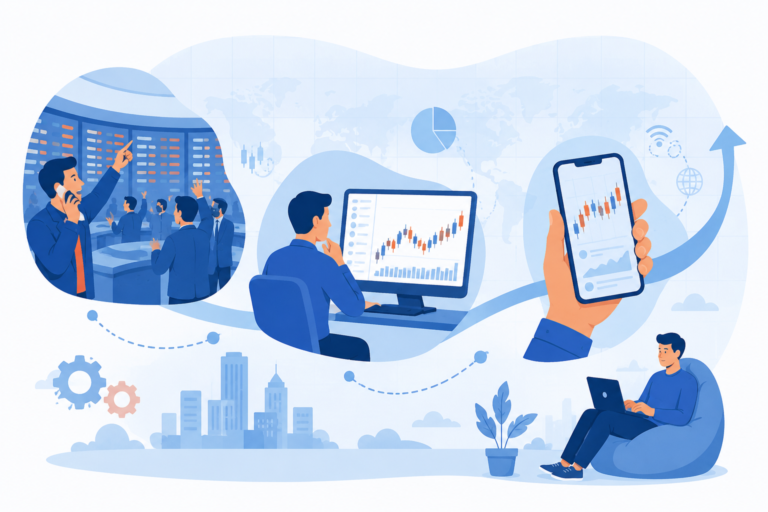
Several developments helped drive this shift:
- Electronic trading systems made order execution faster and more efficient.
- Internet connectivity allowed traders to access markets remotely.
- Online trading platforms gave individuals more control over their trades.
- Real-time market data made it easier to monitor price movements.
- Mobile technology eventually brought trading directly to smartphones and tablets.
The Rise of Online Trading Platforms
The internet did more than connect people. Initially, online platforms focused primarily on desktop computers. Traders could log into their accounts, view charts, check prices, and execute transactions through an internet connection. Although these platforms offered greater convenience than traditional trading methods, users still needed a computer and a stable internet connection.
Today, many online trading platforms offer features such as:
- Real-time price monitoring for tracking market movements.
- Interactive charts for technical analysis.
- Technical indicators to support market research.
- Multiple order types for different trading strategies.
- Risk management tools to help traders manage positions.
- Educational resources for traders at different experience levels.
- Mobile applications for accessing markets beyond the desktop.
As a result, the market became more accessible to a broader audience. Students, professionals, entrepreneurs, and aspiring traders could all explore financial markets using internet-connected devices.
Conclusion
The Evolution of Online Trading has transformed financial markets from physical environments into highly connected digital ecosystems. Traders once depended on trading floors, telephone calls, and traditional intermediaries. Today, technology continues to remove geographical and technological barriers while providing traders with increasingly sophisticated tools.
The Evolution of Online Trading: From Floor to Fingertip
The Evolution of Online Trading: From Floor to Fingertip Before online trading became part of everyday life, financial markets operated in a very different environment. Traders once gathered on physical trading floors, where they bought and sold assets through face-to-face
Opportunities and Challenges of Online Trading in the Philippines
Opportunities and Challenges of Online Trading in the Philippines Online trading has become more accessible than ever, giving Filipinos new ways to participate in global financial markets from the comfort of their homes. Thanks to digital platforms, improved internet connectivity,
Why More OFW Are Getting Into Forex Trading
Why More OFW Are Getting Into Forex Trading Overseas Filipino Workers (OFWs) traditionally invest their hard-earned money in real estate, insurances, or traditional savings accounts. However, a massive shift is happening in the financial landscape today. More Filipinos abroad are