
Forex Trading vs. Stock Trading: Which is Right for You?
Navigating the world of trading can be daunting, especially when deciding between Forex and Stocks. This blog post breaks down the core differences between Forex and Stock trading – from the 24-hour market and high liquidity of Forex to company ownership and the potential for wealth-building in Stocks. We’ll cover everything you need to make an informed decision about where to invest your time and capital.
Understanding the Forex Market
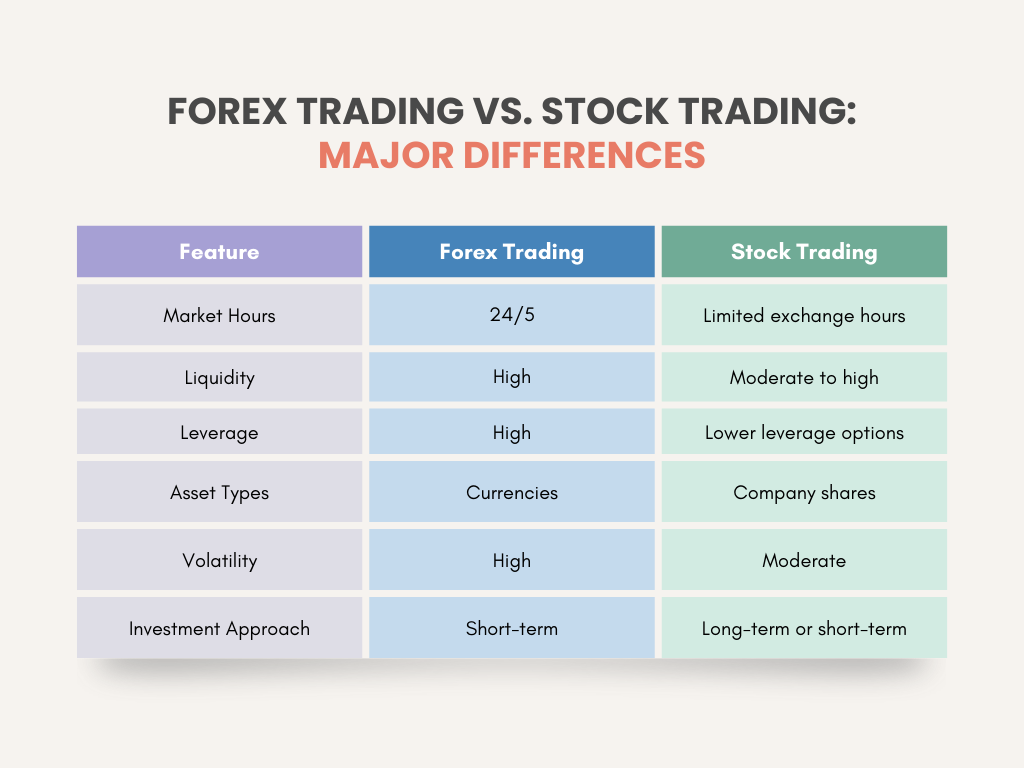
Trading forex currencies involves the exchange of currency pairs in a decentralized global market. It operates 24 hours a day, five days a week, allowing traders to engage in continuous trading. The forex market is highly liquid, with significant trading volume, making it attractive to those seeking short-term opportunities. Forex and stock trading often differs in terms of market accessibility and trading volume.
Key Features
- High Liquidity: Large trading volume ensures ease of trade execution.
- Leverage Opportunities: Traders can control larger positions with smaller capital.
- Market Accessibility: The 24-hour market structure provides flexible trading hours.
- Currency Pairs: Trading is based on major, minor, and exotic currency pairs.
Understanding the Stock Market
Trading stocks involves buying and selling shares of publicly traded companies. Unlike forex, stock markets operate within fixed hours depending on the exchange. Investors participate in stock trading for long-term capital appreciation or dividend income. When comparing forex to stock trading, stock investments are often seen as a more traditional approach to wealth building.
Key Features
- Company Ownership: Stockholders own shares in a company and may receive dividends.
- Market Hours: Trading is conducted during stock exchange hours.
- Volatility Levels: Stocks are influenced by company performance, earnings reports, and economic trends.
- Diversification: Investors can build portfolios across various industries.
Which Trading Option is Right for You?
- Trade forex if you prefer short-term trades, high liquidity, and market accessibility.
- Trade stocks if you seek long-term investments and want ownership in companies.
Both trading options offer unique opportunities, but the choice depends on individual risk tolerance, investment goals, and market understanding. Conducting research and using demo accounts can help in making informed decisions before committing capital. When deciding between forex and stock trading, it is essential to consider risk factors, investment strategies, and market conditions.
By analyzing the key aspects of the two, traders can identify the most suitable market based on their trading preferences and financial objectives.
The Evolution of Online Trading: From Floor to Fingertip
The Evolution of Online Trading: From Floor to Fingertip Before online trading became part of everyday life, financial markets operated in a very different environment.
Opportunities and Challenges of Online Trading in the Philippines
Opportunities and Challenges of Online Trading in the Philippines Online trading has become more accessible than ever, giving Filipinos new ways to participate in global
Why More OFW Are Getting Into Forex Trading
Why More OFW Are Getting Into Forex Trading Overseas Filipino Workers (OFWs) traditionally invest their hard-earned money in real estate, insurances, or traditional savings accounts.
Major vs. Minor Currency Pairs: What Should Filipinos Know?
Major vs. Minor Currency Pairs: What Should Filipinos Know? In forex trading, traders buy one currency while simultaneously selling another. This relationship creates what traders
The Risks and Rewards of CFD Trading Explained
The Risks and Rewards of CFD Trading Explained CFD trading continues to attract traders because it offers flexibility and access to different financial markets. Through
Red Flags: How to Spot Unregulated or Scam Trading Platforms
Red Flags: How to Spot Unregulated or Scam Trading Platforms Online trading continues to attract beginners and experienced traders alike because it offers accessibility, flexibility,